
TRON Energy vs Burning TRX: Which Costs Less for USDT Transfers?
If you have ever sent USDT on the TRON network, your transaction was paid for in one of two ways: it either consumed TRON Energy or burned TRX from your wallet. For many users, this is confusing at first because the wallet does not always explain what happened behind the scenes. If you want to avoid direct TRX burns before sending USDT, TronMax lets you buy TRON Energy and use delegated Energy for your transfer instead.
The difference matters because TRC20 USDT transfers are smart contract transactions. They need computational resources. If your wallet already has enough Energy, TRON can use that Energy. If your wallet does not have enough Energy, the network may burn TRX to cover the missing resource. In some cases, if your wallet does not have enough Energy or enough TRX, the transaction may fail.
This guide compares TRON Energy vs burning TRX from a practical USDT-transfer perspective. You will learn what each method means, when TRX gets burned, why delegated Energy can be more cost-efficient, and how to decide which approach makes sense before you send your next TRC20 transfer.
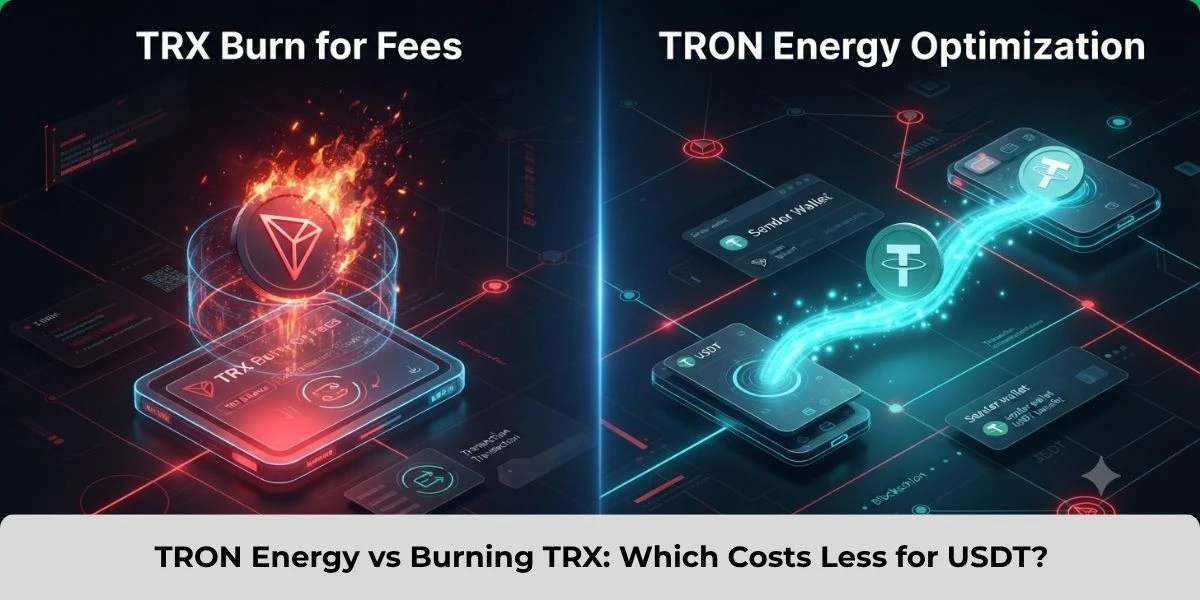
What Is TRON Energy?
TRON Energy is the network resource used for smart contract computation. Whenever a transaction interacts with a smart contract, the TRON Virtual Machine needs to execute code. That execution consumes Energy.
This is why USDT transfers on TRON often require Energy. USDT is a TRC20 token, and TRC20 tokens are smart contract tokens. When you send USDT, the contract needs to check balances, update the sender and recipient state, and record the result on-chain.
You can get Energy in two main ways:
- Stake TRX to generate Energy for your own wallet.
- Receive delegated Energy from another wallet, often through an Energy marketplace.
When your wallet has enough Energy for the transaction, TRON can consume that Energy instead of burning TRX for the Energy portion of the transfer.
What Does Burning TRX Mean?
Burning TRX means TRX is permanently removed from circulation to pay for missing network resources. On TRON, every transaction consumes resources. Basic transaction data consumes Bandwidth, while smart contract execution consumes Energy. If your account does not have enough resources, TRX can be burned to cover the required resource fee.
From the user's point of view, this can feel similar to paying a gas fee. You send a transaction, and some TRX disappears from your wallet. Technically, the network is using TRX as the fallback payment method because your wallet did not have enough Bandwidth or Energy available.
For simple TRX transfers, the burn is usually small because the transaction mainly uses Bandwidth. For TRC20 USDT transfers, the cost can be much higher because the transfer requires Energy for smart contract execution.
TRON Energy vs Burning TRX: The Core Difference
| Method | How it works | Best fit | Main risk |
|---|---|---|---|
| Using Energy | Your wallet consumes available or delegated Energy for the smart contract execution. | Users who want lower and more predictable TRC20 transfer costs. | You must estimate the required Energy before sending. |
| Burning TRX | The network burns TRX from your wallet when Energy or Bandwidth is insufficient. | Occasional users who accept the direct burn cost. | TRX burn can be much more expensive, and the transaction may fail if the wallet has too little TRX. |
The key point is not that one method is "safe" and the other is "unsafe." Both are part of how TRON handles resources. The real difference is cost control. If you use Energy before sending USDT, you can often reduce or avoid direct TRX burn. If you rely on the fallback burn mechanism, you may pay more than necessary.
How Much Energy Does a USDT Transfer Need?
A TRC20 USDT transfer does not always require the exact same amount of Energy. The receiving wallet's current state matters. As a practical estimate, a USDT transfer often requires around 64,000 to 65,000 Energy when the recipient already has a USDT balance/state. When the recipient has no USDT balance/state, the transfer can require around 130,000 to 131,000 Energy. For a deeper breakdown, read our guide on how much Energy a USDT transfer needs.
These numbers should be treated as estimates, not guarantees. Smart contract state, account activation status, dynamic Energy conditions, and wallet behavior can affect the final resource requirement.
Before sending, use the TRON Energy calculator to estimate the likely resource requirement. This is especially important if you are sending to a new wallet, making many transfers, or trying to avoid repeated failed transactions.
Cost Example: Energy vs TRX Burn for USDT
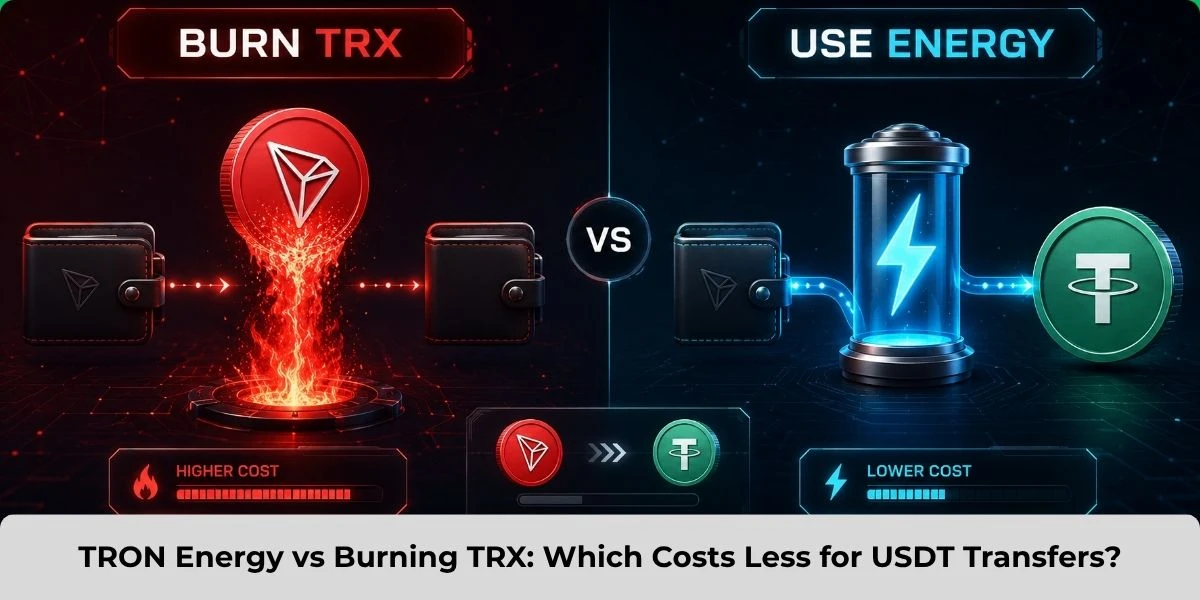
Imagine you want to send USDT to a wallet that requires about 131,000 Energy. If your wallet has no Energy, TRON may burn TRX to pay for the missing smart contract resource. Depending on the network parameters and TRX price at that time, this can become noticeably more expensive than using delegated Energy before the transfer.
If you buy delegated Energy first, the transfer can use the Energy already available in your wallet instead of relying on direct TRX burn. That does not make the transaction "free." You still pay for Energy. The advantage is that delegated Energy can often cost less than allowing the network to burn TRX directly.
For users who send USDT regularly, the difference adds up quickly. A single transfer may not seem important, but repeated TRX burns across many transfers can become a real operating cost for traders, payment teams, freelancers, and businesses.
When Is Using TRON Energy Better?
Using TRON Energy is usually better when your goal is to reduce unnecessary TRX burns during TRC20 transfers. It is especially useful when:
- You send USDT frequently.
- You make business payouts or repeated transfers.
- You send to new or mixed-recipient wallets and want more predictable costs.
- You do not want to stake a large amount of TRX yourself.
- You want to keep more of your TRX balance available instead of losing it to burns.
Energy is not only for advanced users. It is simply TRON's resource system. Once you understand it, you can decide whether to stake TRX, rent Energy, or let the network burn TRX depending on the transaction.
When Is Burning TRX Acceptable?
Burning TRX is not always a disaster. If you send USDT very rarely, do not want to use a marketplace, and keep enough TRX in your wallet, you may accept the direct burn cost for convenience. For a one-time small transfer, some users prefer simplicity over optimization.
The problem starts when users burn TRX repeatedly without realizing there is a cheaper resource path available. If you send TRC20 USDT often, relying on TRX burn every time can become inefficient.
How to Avoid Burning TRX Before Sending USDT
Instead of treating TRX burn as the default, follow this simple process before sending USDT:
- Check whether the recipient wallet already has a USDT balance/state.
- Estimate the Energy required for the transfer.
- Make sure your wallet has enough Energy or buy delegated Energy before sending.
- Keep a small TRX balance for Bandwidth, account activation, or fallback needs.
- Send the USDT after the Energy has arrived in your wallet.
The most common mistake is buying or renting Energy after pressing Send. By then, the transaction may already have burned TRX or failed. Energy must be available before the transaction is submitted.
Common Mistakes When Comparing Energy and TRX Burn
Mistake 1: Thinking USDT transfers work like TRX transfers
A native TRX transfer mainly uses Bandwidth. A USDT transfer uses a smart contract and therefore needs Energy. This is why sending USDT can burn TRX even when sending TRX itself feels almost free. For the full resource-model explanation, read our guide on TRON Energy and Bandwidth.
Mistake 2: Sending with zero TRX and zero Energy
If your wallet has no Energy and no TRX, the transaction may fail. Even when you plan to use delegated Energy, keeping a small TRX balance is useful for account activity, Bandwidth fallback, and edge cases.
Mistake 3: Retrying failed transactions without fixing the cause
If a transaction fails because the wallet lacks Energy or enough TRX, retrying without changing anything can waste more resources. Check the cause first. If you see a failed transaction message, read our guide to the Out of Energy error before sending again.
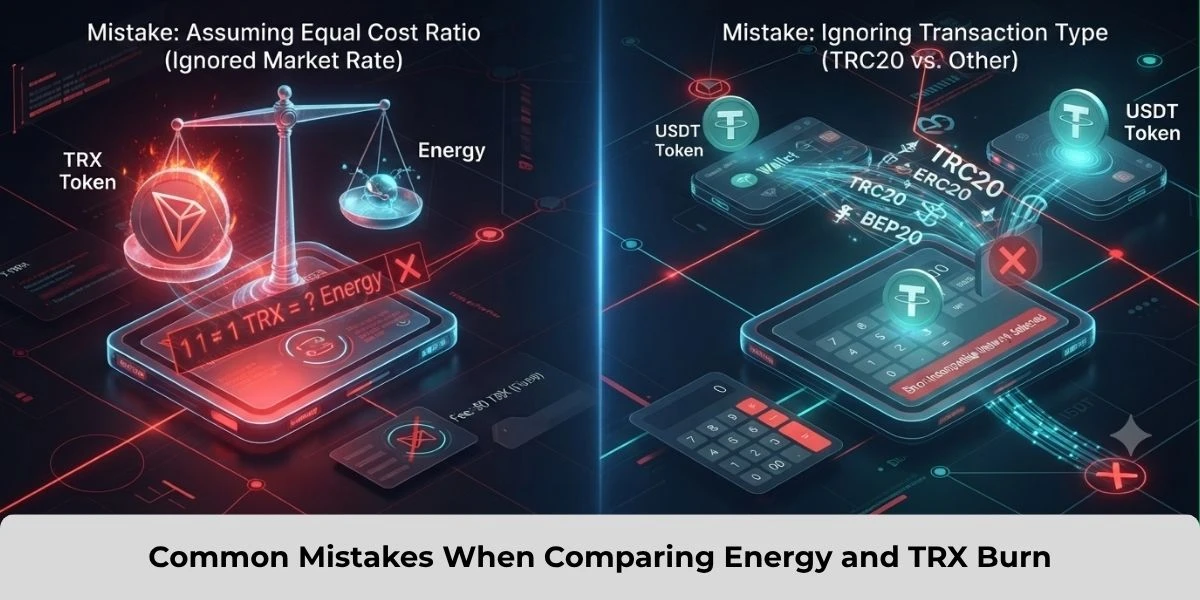
Mistake 4: Treating Energy estimates as fixed guarantees
Energy estimates are useful, but they are not promises. The final cost can vary because of contract state, wallet status, resource conditions, and network changes. Always keep a buffer when the transaction matters.
Final Verdict: Energy Gives You More Control
For TRC20 USDT transfers, using Energy usually gives users more control than relying on direct TRX burn. Burning TRX is the fallback method. It works when you have enough TRX, but it can be more expensive and less predictable.
Delegated Energy gives you another option. Instead of letting the network burn TRX at the time of transfer, you can prepare the resource first and then send USDT with lower cost exposure. For occasional users, burning TRX may be acceptable. For regular users, traders, and businesses, using Energy before sending is often the smarter fee strategy.
FAQ
What is the difference between TRON Energy and burning TRX?
TRON Energy is the resource consumed by smart contract transactions. Burning TRX is the fallback method used when your wallet does not have enough Bandwidth or Energy. For USDT transfers, having Energy available can reduce or avoid direct TRX burn.
Does USDT on TRON always need Energy?
Yes, USDT on TRON is a TRC20 smart contract token, so a USDT transfer requires Energy for contract execution. The exact amount depends on the wallet and contract state.
How much Energy does one USDT transfer need?
A common estimate is around 64,000 to 65,000 Energy when the recipient already has a USDT balance/state, and around 130,000 to 131,000 Energy when the recipient has no USDT balance/state. These are estimates, not guaranteed values.
What happens if I have some Energy but not enough?
TRON may consume the available Energy first and then burn TRX for the remaining resource requirement. If your TRX balance is also too low, the transaction may fail.
Is burning TRX unsafe?
Burning TRX is part of TRON's normal resource model. It is not unsafe by itself. The issue is cost efficiency: for frequent USDT transfers, burning TRX directly may cost more than using delegated Energy.
Can I send USDT without burning TRX?
Yes, if your wallet has enough Energy for the transfer. That Energy can come from staking TRX or receiving delegated Energy before sending.
Should I stake TRX or buy Energy?
Staking can make sense if you hold TRX long term and send transactions regularly. Buying delegated Energy can be more flexible if you do not want to lock a large amount of TRX or if your transfer volume changes.
Related Guides
How to Send USDT on TRON Without TRX for Network Fees
Learn how to send USDT on TRON without burning TRX for network fees by using TRON Energy. Check the required Energy and reduce TRC20 transfer costs.
Best TRON Wallets for TRX, USDT and Energy Management
Compare five TRON wallets for TRX, USDT and Energy management: TronLink, SafePal, imToken, Trust Wallet and Ledger with TronLink.
How Much Energy Does a USDT Transfer Require on TRON?
A TRON USDT transfer commonly needs about 65,000 or 131,000 Energy. Learn what determines the amount and how to estimate your shortfall.
How to Delegate TRON Energy with Stake 2.0
Learn how TRON Stake 2.0 resource delegation works, which resources can be delegated, wallet requirements, lock periods and how to undelegate safely.