
How Much Energy Does a USDT Transfer Require on TRON?
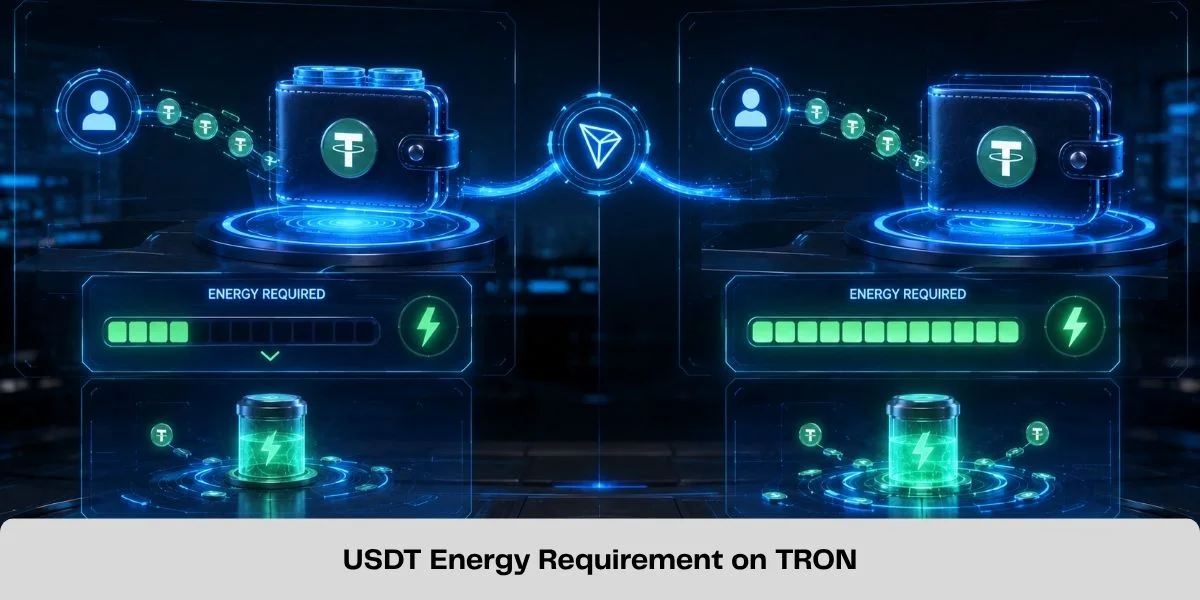
A standard TRC20 USDT transfer on TRON commonly requires approximately:
- 65,000 Energy when the recipient currently has a positive USDT balance;
- 131,000 Energy when the recipient's USDT balance is zero.
These are rounded planning figures, not permanent guarantees. Contract state, TRON's dynamic Energy model and network governance parameters can change the final requirement. Estimate the transaction close to execution and check the sending wallet's existing Energy before acquiring more.
Quick Answer: 65,000 or 131,000 Energy
| Recipient condition | Typical planning estimate |
|---|---|
| Recipient has a positive USDT balance | About 64,000-65,000 Energy |
| Recipient has zero USDT | About 130,000-131,000 Energy |
The amount of USDT being transferred usually does not determine the Energy requirement. Sending 10 USDT and 10,000 USDT can call the same transfer function and consume a similar amount of Energy when the surrounding contract state is unchanged.
The recipient's current USDT balance is generally more useful than the age of the wallet. An old address with many previous transfers can still fall into the higher scenario after its USDT balance returns to zero.
Why Does a USDT Transfer Need Energy?
USDT on TRON is a TRC20 smart-contract token. Sending it requires the USDT contract to update the sender's and recipient's balances.
TRON uses two separate resources during this process:
- Energy covers smart-contract computation;
- Bandwidth covers the transaction data recorded by the network.
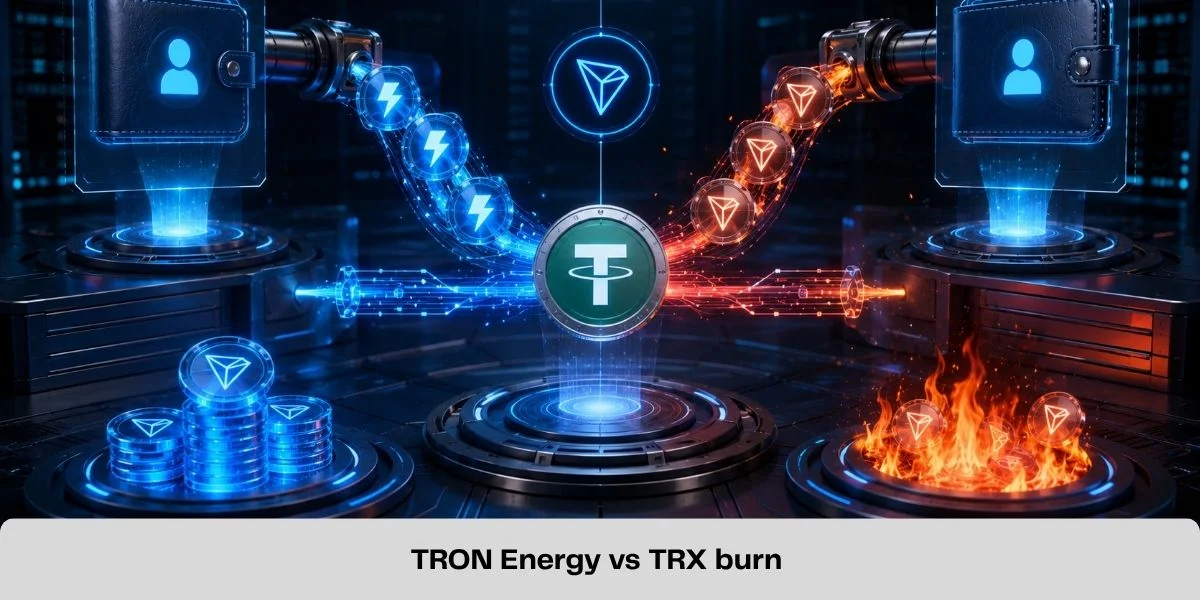
A wallet may have enough Bandwidth to broadcast the transaction but still lack the Energy required to complete the USDT contract call. When available resources are insufficient, TRX can be burned to cover the shortfall under the transaction's fee conditions.
Why the Recipient's USDT Balance Changes the Requirement
The two common Energy amounts result from different storage changes inside the USDT contract.
When the recipient already has a positive USDT balance, the contract modifies an existing non-zero value. When the recipient has zero USDT, the contract performs a more expensive change from zero to a non-zero balance.
That higher requirement may apply even if the recipient:
- has an old and activated TRON account;
- previously received USDT;
- holds other TRC20 tokens;
- has an extensive transaction history.
This is why the labels "new wallet" and "active wallet" can be misleading. Before sending, ask: Does this address have a positive USDT balance now?
Account activation remains a separate issue. An unactivated address may require activation before it can receive delegated resources or perform normal account operations, but wallet age alone does not determine USDT Energy consumption.
How to Estimate Energy Before Sending USDT
1. Review the wallet's transaction preview
After entering the recipient and amount, check whether the wallet displays expected resource usage or a network-fee estimate. Confirm that the preview refers to the actual TRON USDT transaction rather than a generic fee label.
2. Use the TRON Energy calculator
For a practical estimate, use the TRON Energy calculator shortly before sending. It provides a transaction-focused estimate, while this article explains why the result can vary.
3. Check the recipient on TRONSCAN
Search the receiving address and inspect its current USDT balance:
- positive balance: begin with the lower planning estimate;
- zero balance: begin with the higher planning estimate.
Do not rely only on previous USDT transactions.
4. Simulate the contract call
Developers and payment systems can use TRON's contract-estimation interfaces with the actual sender, recipient and transaction parameters. Simulation is more precise than a static table, although state can still change before execution.
How to Calculate Your Energy Shortfall
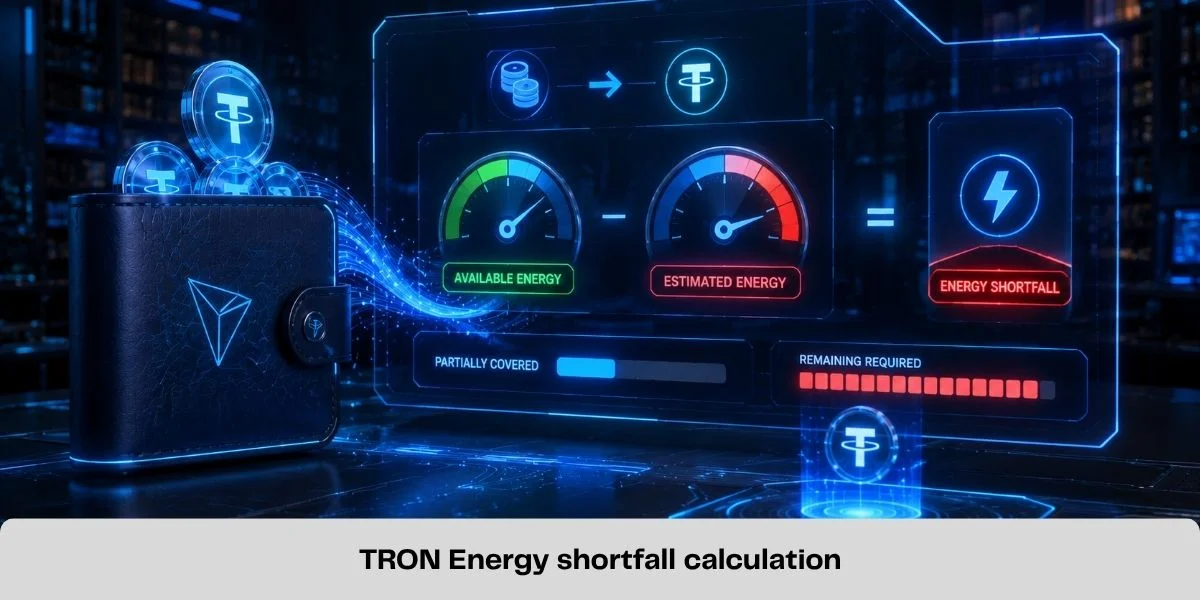
The transaction's full requirement is not always the amount you need to acquire. First subtract the Energy already available in the sending wallet:
Energy shortfall = estimated transaction Energy − available Energy
Examples:
| Estimated requirement | Available Energy | Shortfall |
|---|---|---|
| 64,500 | 0 | 64,500 |
| 64,500 | 20,000 | 44,500 |
| 130,500 | 15,000 | 115,500 |
Use the resource balance of the wallet that will send the USDT. Delegating Energy to the recipient does not cover the sender's contract execution.
Add a reasonable buffer if the wallet cannot provide a transaction-specific estimate. Avoid acquiring an arbitrarily large amount, especially when delegated Energy is available only for a defined rental period.
How Missing Energy Becomes a TRX Fee
If the sender lacks sufficient Energy, TRON can burn TRX for the missing computation, subject to the available balance and the transaction's fee limit.
The basic formula is:
TRX burned = missing Energy × current Energy unit price in sun ÷ 1,000,000
The Energy unit price is a network governance parameter and can change. Bandwidth shortages can also create an additional TRX cost. Use current network data rather than copying an old fee table.
The dollar value changes with the TRX market price as well. A fixed TRX fee is not a fixed fiat cost.
What Can Change the Final Requirement?
Dynamic Energy factor
TRON can apply additional Energy consumption to heavily used smart contracts. A change in the USDT contract's dynamic factor can alter the requirement for the same type of transfer.
Recipient state
The recipient's USDT balance may change between estimation and execution. A lower estimate can become stale if the balance returns to zero before the transaction is confirmed.
Existing wallet resources
Energy obtained through staking or delegation is consumed before TRX is burned for the remaining shortfall. Bandwidth is calculated separately.
Different contract calls
The 65k and 131k figures apply to common USDT transfers. Token approvals, swaps, other TRC20 contracts and dApps may consume very different amounts.
Common Calculation Mistakes
- Treating every old wallet as a 65k transaction;
- assuming every new address automatically needs exactly 131k;
- checking the recipient's history instead of its current USDT balance;
- forgetting to subtract Energy already available to the sender;
- acquiring Energy for the recipient instead of the sending wallet;
- treating rounded estimates as guaranteed values;
- ignoring Bandwidth and the transaction fee limit;
- using a fee table published under older network parameters.
Pre-Transfer Checklist
Before sending USDT:
- Confirm the TRON recipient address.
- Check whether the recipient currently has a positive USDT balance.
- Obtain a current wallet, calculator or simulation estimate.
- Check the sending wallet's available Energy and Bandwidth.
- Calculate the remaining shortfall and review the fee limit.
- Confirm delegated Energy has arrived before signing.
If an earlier transfer failed, diagnose its receipt using the TRON Out of Energy error guide before submitting the transaction again.
Frequently Asked Questions
How much Energy does a USDT transfer need on TRON?
A common transfer currently requires approximately 64,000-65,000 Energy when the recipient has a positive USDT balance and 130,000-131,000 Energy when the balance is zero. Verify the current estimate before sending.
Does a new wallet always require 131,000 Energy?
Not simply because it is new. The higher scenario is generally related to the recipient's current USDT balance being zero.
Does the amount of USDT affect Energy consumption?
Usually not materially for the same USDT transfer function. Contract and recipient state are more important than the token amount.
Can I send USDT with zero Energy?
Yes, if the wallet has enough TRX and the transaction permits enough TRX burn to cover the Energy and Bandwidth shortfall. Otherwise, it can fail.
Should I obtain exactly 65,000 or 131,000 Energy?
Use a recent transaction estimate with an appropriate buffer. Subtract the Energy already available in the sending wallet before covering the shortfall.
Why was TRX burned after I obtained Energy?
The delegated amount may have been insufficient, assigned to the wrong address, consumed by another transaction or unavailable at execution. A Bandwidth shortfall can also burn TRX.
Estimate the Shortfall Before Choosing How to Pay
The reliable answer is not simply "65k or 131k." Combine the recipient's current USDT balance, a fresh estimate and the Energy already available in the sending wallet.
Once the shortfall is known, compare staking, delegated Energy and direct TRX burn using current prices and your transaction frequency. For the broader decision, read How to Reduce TRC20 Fees.
Users who choose temporary delegated resources can buy TRON Energy after reviewing the live amount, duration and price on TronMax.
Official TRON Resources
TRON Resource Model TRON Energy Consumption Mechanism TRON Developer FAQ
Related Guides
How to Send USDT on TRON Without TRX for Network Fees
Learn how to send USDT on TRON without burning TRX for network fees by using TRON Energy. Check the required Energy and reduce TRC20 transfer costs.
Best TRON Wallets for TRX, USDT and Energy Management
Compare five TRON wallets for TRX, USDT and Energy management: TronLink, SafePal, imToken, Trust Wallet and Ledger with TronLink.
How to Delegate TRON Energy with Stake 2.0
Learn how TRON Stake 2.0 resource delegation works, which resources can be delegated, wallet requirements, lock periods and how to undelegate safely.
How to Stake TRX: Energy, Bandwidth and Voting Rewards
Learn how to stake TRX with Stake 2.0, choose Energy or Bandwidth, vote for Super Representatives and unstake safely.