
TRON Energy and Bandwidth Explained: How TRX Fees Work
TRON Energy, Bandwidth, and TRX fees are the three concepts every TRON user needs to understand before sending USDT on the TRC20 network. If you want to reduce USDT transfer costs without locking capital, you can rent TRON Energy through TronMax before sending TRC20 USDT.
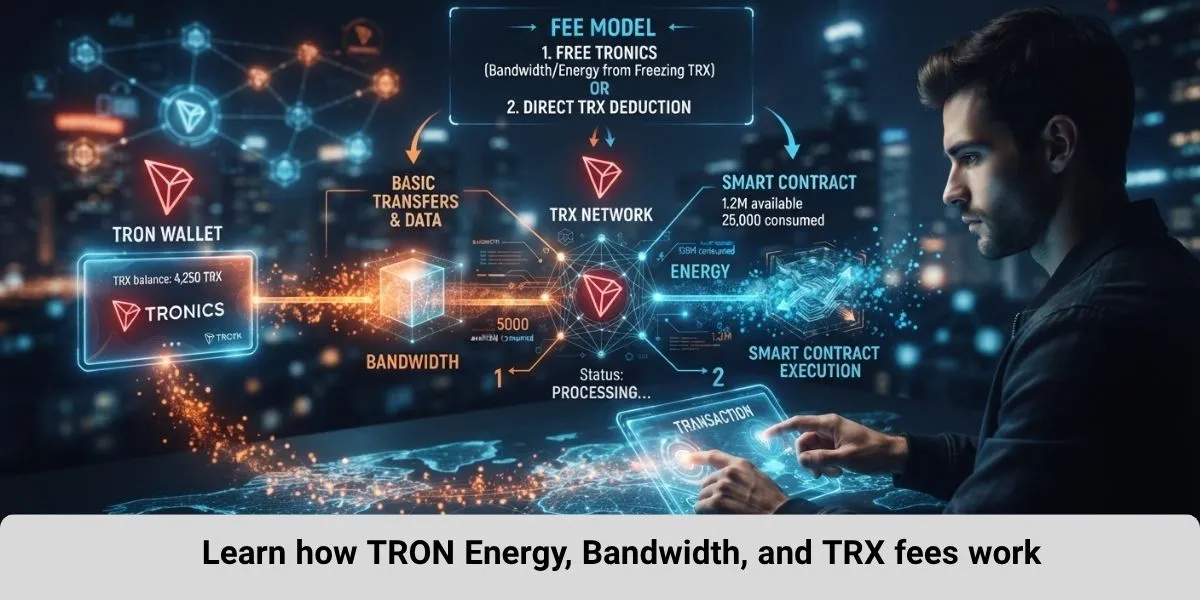
TRON does not charge fees in the same way Ethereum does. Instead of using only a gas market, TRON uses a resource model built around Bandwidth and Energy. Bandwidth pays for transaction data, while Energy pays for smart contract execution. TRX is the native token used when an account does not have enough resources, and it can also be staked to receive resources and voting rights.
This is why sending TRX on the TRON network can be almost cost-free for many users, while sending TRC20 USDT often requires Energy. If your wallet has enough Energy, you can avoid burning TRX directly for the transfer. If it does not, the network may burn TRX to cover the missing resource, or the transaction may fail.
Understanding TRON Energy, Bandwidth, and TRX burn is the key to avoiding unnecessary TRON fees, especially if you send USDT regularly.
TRON Resource Model at a Glance
TRON separates network usage into different resources. This model helps the network process transactions efficiently while giving users more ways to manage costs.
| Concept | What it means | Used for | How to get it | If you do not have enough |
|---|---|---|---|---|
| Bandwidth | Measures transaction data size | TRX transfers and basic transaction data | Free daily allocation or staking TRX | TRX may be burned |
| Energy | Measures smart contract computation | TRC20 transfers, DApps, and contract calls | Staking TRX or receiving delegated Energy | TRX may be burned or the transaction may fail |
| TRX | Native token of TRON | Resource burns, staking, voting, and transfers | Buy, hold, or receive TRX | Some transactions may fail |
| TRON Power | Voting right from staking TRX | Voting for Super Representatives | Stake TRX | You cannot vote without it |
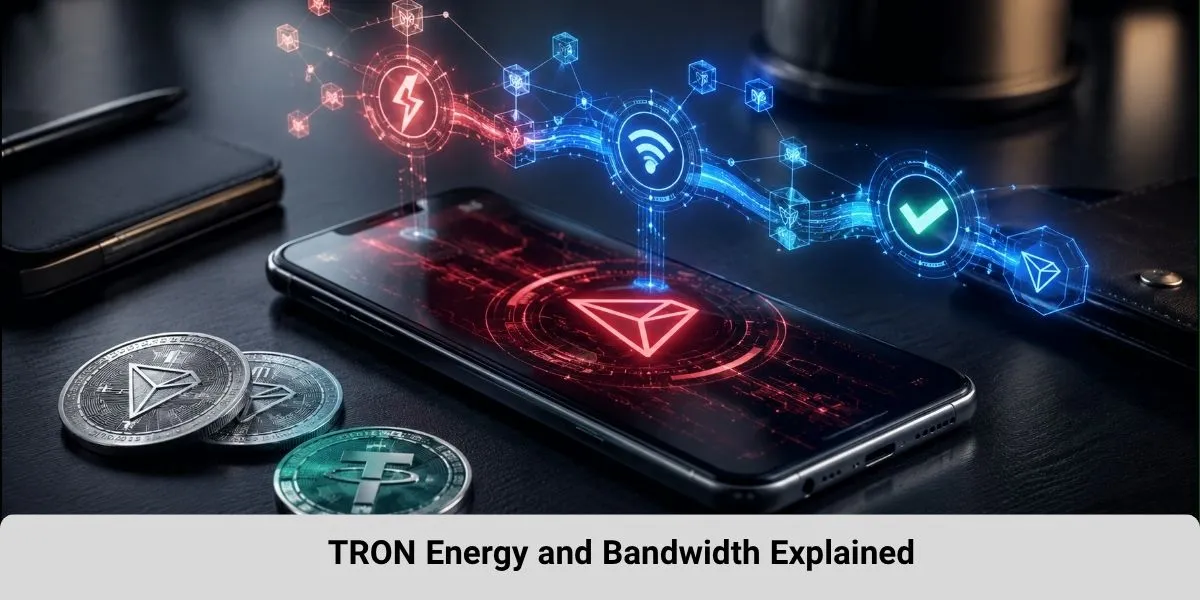
The most important point for everyday users is simple: TRX transfers mainly use Bandwidth, but USDT transfers on TRON use Energy because USDT is a TRC20 smart contract token.
What Is Bandwidth on TRON?
Bandwidth is the resource used to pay for the data size of a transaction on the TRON network. Every transaction has data: sender address, receiver address, amount, signature, and other information that must be written to the blockchain. Bandwidth measures this data usage.
A basic TRX transfer usually consumes Bandwidth, not Energy. That is why TRX transfers can often feel almost free compared with smart contract transfers.
When Bandwidth Is Used
Bandwidth is mainly used for:
- Sending TRX
- Sending some simple transactions
- Recording transaction data on-chain
- Basic account activity that does not require smart contract execution
For example, if you send TRX from one wallet to another, the transaction does not need to execute complex smart contract code. It simply moves the native token from one address to another. This usually consumes Bandwidth.
How Much Free Bandwidth Do TRON Accounts Get?
TRON accounts receive a small amount of free Bandwidth every day. This free daily Bandwidth is useful for simple transactions and helps make basic TRON usage inexpensive.
However, free Bandwidth is limited. If you make many transactions or your transaction requires more data than your available Bandwidth, the network may burn a small amount of TRX to cover the missing Bandwidth.
This is why some TRON transactions cost nothing from your visible TRX balance, while others burn a small amount of TRX.
What Happens When Bandwidth Runs Out?
If your account runs out of Bandwidth, TRON can still process the transaction by burning TRX. In this case, TRX is used to pay for the missing resource.
For simple transactions, this burn is usually small. But for smart contract interactions, Bandwidth is not the main cost. The bigger issue is Energy.
What Is Energy on TRON?
Energy is the resource used to pay for smart contract computation on TRON. Whenever a transaction interacts with a smart contract, the TRON Virtual Machine needs to execute code. That computation consumes Energy.
This is the key concept behind most TRC20 fees.
Why Smart Contracts Need Energy
A smart contract transaction is more complex than a simple token movement. The network must run code, check rules, update balances, and store the result on-chain.
For example, when you send TRC20 USDT, the network does not simply move the native TRX token. It interacts with the USDT smart contract. The contract checks your balance, updates the sender and receiver balances, and records the transfer.
That smart contract execution consumes Energy.
Why TRC20 USDT Transfers Consume Energy
USDT on TRON is a TRC20 token. TRC20 tokens are smart contract tokens, similar in concept to ERC20 tokens on Ethereum.
Because USDT is controlled by a smart contract, every USDT transfer on TRON requires Energy. This is why many users are confused when they try to send USDT and the wallet asks for TRX.
The TRX is not needed because USDT is paid in TRX. It is needed because the network may need to burn TRX if the wallet does not have enough Energy.
What Happens When Energy Is Not Enough?
If your account does not have enough Energy for a TRC20 transfer, TRON may burn TRX to pay for the missing Energy. If your wallet does not have enough TRX to cover the burn, the transaction may fail.
This is the source of the common Out of Energy problem.
A failed transaction can still consume some resources. That is why users should not repeatedly retry failed USDT transfers without understanding the cause. If your wallet lacks Energy or enough TRX, repeating the transaction may only waste more resources.
To fix this, you can either keep enough TRX for burns, stake TRX to generate Energy, or use delegated Energy through an Energy rental service such as TronMax.
What Is TRX Used For on TRON?
TRX is the native token of the TRON network. It has several roles, and understanding them helps explain how TRON fees work.
Burning TRX for Missing Resources
When your wallet does not have enough Bandwidth or Energy, TRON may burn TRX to pay for the missing resource.
This burn is not the same as paying a normal Ethereum-style gas fee, but the user experience can feel similar. You send a transaction, and some TRX disappears from your wallet because the network used it to cover resource consumption.
The most common case is a TRC20 USDT transfer without enough Energy. In that situation, TRX may be burned to pay for the smart contract execution.
Staking TRX for Energy or Bandwidth
Users can stake TRX to receive network resources. Depending on how the stake is allocated, staking can provide Energy or Bandwidth.
This is useful for users who send transactions regularly and want to reduce direct TRX burns. Instead of burning TRX for every transaction, they can stake TRX and use the generated resources.
The downside is capital lockup. Staked TRX cannot be used freely while it is locked. If you only send USDT occasionally, staking a large amount of TRX may not be capital-efficient.
Voting for Super Representatives
Staking TRX can also provide voting power, often called TRON Power. Users can vote for Super Representatives, who are responsible for producing blocks and helping maintain the network.
This is part of TRON's Delegated Proof of Stake system. It is important for the network, but for most everyday USDT users, the more practical reason to understand staking is resource management.
Why Do You Need TRX to Send USDT on TRON?
This is one of the most common questions new TRON users ask.
You may hold USDT in your wallet and wonder: "Why do I need TRX if I am sending USDT?"
The reason is that USDT on TRON is a TRC20 smart contract token. Sending it requires Energy. If your wallet does not already have enough Energy, TRON needs another way to pay for the required computation. That fallback is usually TRX burn.
So TRX is not the asset you are sending. TRX is the resource-payment token that may be used if your account does not have enough Energy.
There are three practical ways to handle this:
- Keep enough TRX in your wallet and allow the network to burn it when needed.
- Stake TRX to generate Energy.
- Receive delegated Energy from another wallet or rent Energy before sending USDT.
For frequent users, the third option can often be more efficient than burning TRX directly.
TRON Staking vs Energy Rental
There are two main ways to avoid direct TRX burns for TRC20 transfers: staking TRX or receiving delegated Energy.
Both methods can work, but they are useful for different types of users.
Staking TRX for Energy
Staking TRX means locking your TRX to receive network resources. If you choose Energy, your wallet can use that Energy for smart contract transactions such as USDT transfers.
Staking makes sense when:
- You hold TRX long term.
- You send TRC20 transactions regularly.
- You want to manage resources directly.
- You do not mind locking capital.
- Your transaction volume is predictable.
The main downside is that you need enough staked TRX to cover your actual Energy needs. If your usage increases, you may still run out of Energy. If your usage decreases, you may have unused resources while your capital remains locked.
Receiving Delegated Energy
TRON allows Energy to be delegated from one account to another. This means a wallet with staked TRX can provide Energy to another wallet for a limited use case or period.
This is the foundation of Energy rental.
Instead of staking a large amount of TRX yourself, you can receive Energy from another account that already has staked resources. You then use that Energy to process your TRC20 transfer and avoid direct TRX burn.
When Energy Rental Makes More Sense
Energy rental can make more sense when:
- You do not want to lock TRX.
- You send USDT occasionally but want lower fees.
- Your transaction volume changes from day to day.
- You are a business making many TRC20 transfers.
- You want predictable cost control.
- You do not want to manage staking manually.
For example, a business sending many USDT payouts may not want to keep large amounts of TRX locked just for transaction resources. Renting Energy when needed can be more flexible.
Energy rental is not "free." It simply changes how the cost is paid. Instead of burning TRX directly to the network, the user pays for temporary delegated Energy, often reducing the effective cost of the transfer.
How TronMax Helps Reduce TRC20 Transfer Costs
TronMax is designed for users who want to reduce TRON transaction costs without manually managing staking, resource delegation, or complex wallet settings.
When you rent TRON Energy through TronMax, Energy is delegated to your wallet for the relevant transfer. Your wallet can then use that Energy for a TRC20 USDT transaction, reducing or avoiding direct TRX burn for the Energy portion of the transfer.
This is useful for:
- Users who send USDT frequently
- Traders moving funds between wallets and exchanges
- Businesses processing TRC20 payouts
- Freelancers and remote teams using stablecoins
- Users who do not want to lock capital in TRX staking
- Anyone who wants to avoid unnecessary TRX burns
The practical benefit is cost control. Instead of guessing how much TRX may burn or staking more TRX than you need, you can use rented Energy for specific TRC20 transfers.
If you are not sure how much Energy your transaction may require, check the TRON Energy calculator or read our guide on how much Energy a USDT transfer needs.
Common TRON Fee Problems
Even when users understand Energy and Bandwidth, some TRON fees can still feel confusing. These are the most common problems.
Out of Energy Error
The Out of Energy error usually happens when your transaction needs more Energy than your wallet has available.
This often appears during TRC20 transfers, DApp interactions, swaps, or other smart contract transactions.
To prevent it:
- Check how much Energy the transaction may need.
- Keep enough TRX as a fallback.
- Stake TRX if you use TRON frequently.
- Rent Energy before sending USDT.
- Avoid repeatedly retrying failed transactions without fixing the resource issue.
For a full troubleshooting guide, read our article on the Out of Energy error.
Not Enough TRX
Sometimes users have USDT but no TRX. This can cause confusion because they may think holding USDT is enough to send USDT.
In reality, the wallet may need TRX if there is not enough Energy. Without TRX or delegated Energy, the transaction may fail.
This is why many wallets recommend keeping a small TRX balance. However, if you want to reduce direct TRX burns, Energy rental can be a better option for frequent transfers.
New Account Activation
A new TRON address may need to be activated before it fully exists on-chain. Sending assets to a brand-new address can require extra resources or a small account creation cost.
This is one reason two USDT transfers may not always consume the same amount of resources.
Before sending to a new address, check whether the address is active and make sure the sender has enough resources to complete the transfer.
Dynamic Energy Changes
Energy requirements are not always fixed. TRON uses mechanisms that can make Energy consumption vary depending on contract behavior, resource conditions, and network usage.
This is especially important for popular smart contracts. If a contract is heavily used, the Energy required to interact with it may change.
For users, this means exact fee estimates should be treated as estimates, not guarantees. A calculator can help, but the final resource requirement may still vary.
TRC10 vs TRC20: Why Token Standard Matters
Not all TRON tokens consume resources in the same way.
TRC10 Tokens
TRC10 is a native token standard on TRON. TRC10 tokens do not rely on the TRON Virtual Machine in the same way TRC20 tokens do.
Because of this, TRC10 transfers mainly consume Bandwidth rather than heavy smart contract Energy.
TRC20 Tokens
TRC20 tokens are smart contract tokens. They work through contract logic on the TRON Virtual Machine.
USDT on TRON is a TRC20 token. That is why sending USDT consumes Energy.
This difference matters because many users assume all token transfers on TRON work like TRX transfers. They do not. A TRX transfer and a TRC20 USDT transfer have different resource requirements.
How to Choose the Best Fee Strategy
The best way to manage TRON fees depends on how often you use the network.
If you send TRX only occasionally, the free daily Bandwidth may be enough for many basic actions.
If you send USDT once in a while, keeping a small TRX balance may be acceptable, but you should understand that TRX may burn if you do not have Energy.
If you send USDT frequently, burning TRX every time can become inefficient. In that case, staking TRX or renting Energy may be better.
If you are a business, payment operator, trader, or high-frequency user, Energy rental can help reduce operational costs without forcing you to lock large amounts of capital in TRX.
A simple rule:
- Occasional TRX transfers: use free Bandwidth.
- Occasional USDT transfers: keep enough TRX or rent Energy when needed.
- Frequent USDT transfers: compare staking vs Energy rental.
- Business transfers: use calculators and cost planning before choosing a strategy.
You can also read our guide on how to reduce TRC20 fees for a deeper comparison of practical cost-saving methods.
Final Takeaway
TRON fees make more sense once you understand the difference between Bandwidth, Energy, and TRX.
Bandwidth pays for transaction data. Energy pays for smart contract execution. TRX is burned when the account does not have enough resources. Since TRC20 USDT transfers require smart contract execution, they need Energy.
That is why sending USDT on TRON may require TRX, even if you are not sending TRX itself.
The goal is not always to make a transaction "free." The real goal is to avoid unnecessary TRX burns and choose the most efficient resource strategy for your usage.
For occasional users, keeping some TRX may be enough. For regular users, staking can help. For frequent transfers and businesses, renting Energy through TronMax can be a more flexible way to reduce TRC20 transaction costs without locking capital.
FAQ
What is TRON Energy?
TRON Energy is the resource used to pay for smart contract computation on the TRON network. TRC20 transfers, DApp interactions, swaps, and contract calls consume Energy.
What is Bandwidth on TRON?
Bandwidth is the resource used to pay for transaction data size. Basic TRX transfers mainly consume Bandwidth. TRON accounts receive a small amount of free Bandwidth daily, and more Bandwidth can be obtained by staking TRX.
Why do I need TRX to send USDT?
You need TRX because USDT on TRON is a TRC20 smart contract token. Sending it consumes Energy. If your wallet does not have enough Energy, the network may burn TRX to cover the missing resource.
Does TRON have gas fees?
TRON does not use gas in the same way Ethereum does. Instead, it uses Bandwidth and Energy. However, if your wallet does not have enough resources, TRX may be burned, which can feel similar to paying a gas fee.
Is TRON Energy free?
Energy is not automatically free for standard accounts. You can get Energy by staking TRX or receiving delegated Energy from another account. Energy has value because it comes from staked resources or rental.
How do I get Energy on TRON?
You can get Energy by staking TRX for Energy or by receiving delegated Energy from another wallet. Energy rental services such as TronMax make delegated Energy easier to use for TRC20 transfers.
What happens if I do not have enough Energy?
If you do not have enough Energy, TRX may be burned to cover the missing resource. If you do not have enough TRX either, the transaction may fail. Some failed transactions can still consume resources.
Can I send USDT without burning TRX?
Yes, if your wallet has enough Energy for the TRC20 transfer, you can avoid direct TRX burn. This Energy can come from staking or from delegated Energy through a rental service.
What is the difference between staking TRX and renting Energy?
Staking TRX locks your TRX to generate resources over time. Renting Energy gives you temporary delegated Energy without requiring you to lock a large amount of TRX yourself. Staking may suit long-term heavy users, while rental may suit flexible or high-volume transfer needs.
How much Energy does one USDT transfer need?
The exact amount can vary depending on the USDT contract state, wallet conditions, receiving account status, and dynamic Energy factors. Use a calculator or check a current estimate before sending large or frequent transfers.
What is the account activation fee on TRON?
A new TRON address may require activation before it fully exists on-chain. This can require additional resources or a small account creation cost. This mainly matters when sending assets to a brand-new TRON address.
What is the difference between TRC10 and TRC20?
TRC10 is a native token standard that mainly uses Bandwidth. TRC20 is a smart contract token standard that requires Energy. USDT on TRON is TRC20, so USDT transfers consume Energy.
Is Energy Rental safe?
Energy rental can be safe when the service only delegates Energy to your wallet and does not require access to your private keys or seed phrase. Always use trusted platforms, check permissions carefully, and never share your recovery phrase.
Related Guides
How to Send USDT on TRON Without TRX for Network Fees
Learn how to send USDT on TRON without burning TRX for network fees by using TRON Energy. Check the required Energy and reduce TRC20 transfer costs.
Best TRON Wallets for TRX, USDT and Energy Management
Compare five TRON wallets for TRX, USDT and Energy management: TronLink, SafePal, imToken, Trust Wallet and Ledger with TronLink.
How Much Energy Does a USDT Transfer Require on TRON?
A TRON USDT transfer commonly needs about 65,000 or 131,000 Energy. Learn what determines the amount and how to estimate your shortfall.
How to Delegate TRON Energy with Stake 2.0
Learn how TRON Stake 2.0 resource delegation works, which resources can be delegated, wallet requirements, lock periods and how to undelegate safely.