
What Is TRON Energy Rental? A Beginner's Guide
What Is TRON Energy Rental?
TRON Energy rental is a way to use TRON network resources without staking a large amount of TRX yourself. If you already understand the basics and only need temporary resources for your next USDT transfer, you can rent TRON energy through TronMax. For beginners, though, it helps to understand what Energy is, why it exists, and how rental works before using it.
This guide explains TRON Energy rental in simple terms. It focuses on how resource delegation works, who provides Energy, who rents it, and when renting makes more sense than burning TRX or staking your own tokens.
Quick Answer: What Is TRON Energy Rental?
TRON Energy rental is the process of receiving delegated Energy from another TRON account for a limited time. Instead of freezing your own TRX to generate Energy, you pay for access to Energy that another user or provider has already generated through staking.
The rented Energy is assigned to your wallet address. When you send USDT or interact with a TRC20 smart contract, the TRON network can consume that Energy instead of relying only on TRX burns.
In simple terms: staking creates Energy, delegation transfers access to Energy, and rental lets regular users use that Energy on demand.
Why TRON Users Need Energy
TRON uses different network resources for different types of activity. Simple TRX transfers mainly rely on Bandwidth. Smart contract transactions, including many TRC20 token transfers, require Energy.
USDT on TRON is a TRC20 token, so sending it is not the same as sending native TRX. A USDT transfer triggers a smart contract, and that contract needs Energy to execute. If your wallet does not have enough Energy, the network may use TRX from your wallet to cover the missing resource cost.
That is why many users look for ways to access Energy before sending USDT. The goal is not only to complete the transfer, but also to avoid using more TRX than necessary.
How TRON Energy Rental Works
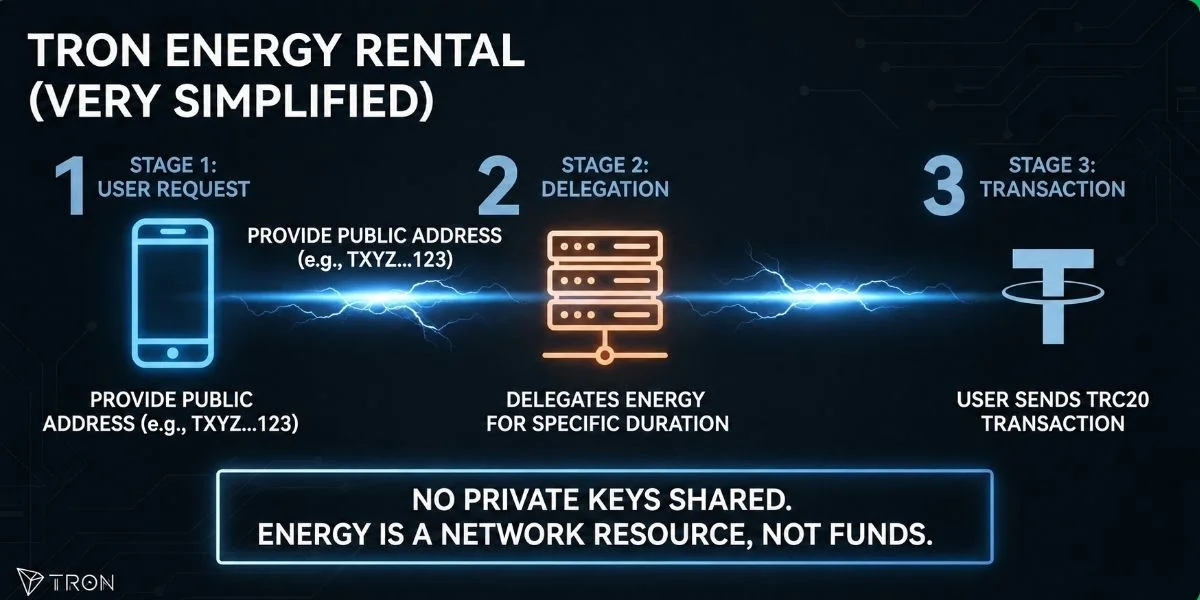
Energy rental is based on resource delegation. A provider stakes TRX and generates Energy. Instead of using all of that Energy themselves, they delegate a portion of it to another wallet address for a specific duration.
From the user side, the process usually looks like this:
- The user decides how much Energy they need.
- The user provides the public TRON address that needs Energy.
- A provider delegates Energy to that wallet address.
- The user sends their TRC20 transaction while the Energy is available.
- After the rental period ends, the delegated Energy is no longer available to that wallet.
The important point is that Energy delegation does not require sharing private keys. Energy is assigned to a public address as a network resource; it does not give the provider control over the user's wallet funds.
Who Provides TRON Energy?
TRON Energy is usually supplied by users, validators, institutions, or platforms that hold and stake large amounts of TRX. Staking generates network resources, including Energy and Bandwidth. Some of those resource holders may not need to use all of their generated Energy every day.
Instead of letting unused Energy sit idle, providers can delegate it to users who need Energy for transactions. This creates a practical resource market: providers make use of idle resources, and regular users access Energy without locking large amounts of TRX themselves.
Who Uses TRON Energy Rental?
Energy rental is most useful for people who use TRON for real transactions but do not want to manage a large staked TRX position.
Common users include:
- USDT users who send TRC20 transfers occasionally.
- Traders who want to keep capital liquid instead of locking it in TRX.
- Small businesses that receive or send stablecoin payments.
- Wallet operators, bots, or tools that need predictable transaction costs.
- Users who want to avoid repeated TRX burns when interacting with smart contracts.
The common pattern is simple: these users need Energy, but they do not necessarily want to become long-term TRX stakers.
TRON Energy Rental vs Burning TRX
When a wallet does not have enough Energy, the TRON network may use TRX to cover the missing resource cost. This is often described as burning TRX. For users who send TRC20 transactions often, relying only on TRX burns can become inefficient over time.
Energy rental offers a different approach. Instead of letting the network consume TRX during each transaction, the user obtains Energy first and then sends the transaction while that Energy is available.
This section should stay short in this article. A full comparison between Energy and TRX burns belongs in a separate article focused on that exact topic.
TRON Energy Rental vs Staking TRX
Staking TRX can make sense for long-term TRX holders. If you already plan to hold a large TRX balance and you use the network every day, staking can generate Energy directly from your own capital.
Energy rental makes more sense when you want flexibility. You do not need to lock a large amount of TRX, and you can access Energy only when you need it.
The difference is not only about transaction fees. It is about capital strategy. Staking is better for users who want to hold TRX long term. Renting is better for users who mainly need temporary resources for practical transactions.
Keep this comparison brief here. The deeper staking-vs-rental analysis should stay in the dedicated comparison article.
When Renting TRON Energy Makes Sense
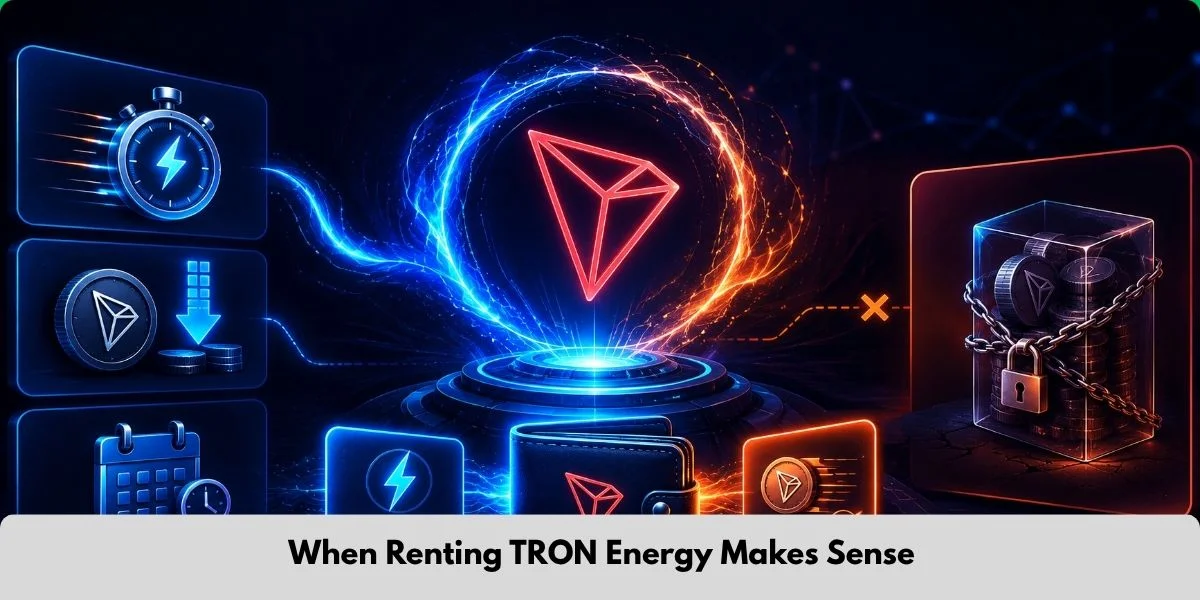
Renting TRON Energy is usually most practical when you need short-term resources and do not want to lock your capital.
It may make sense when:
- You send USDT on TRON but do not hold much TRX.
- You want to keep your funds liquid instead of staking them.
- You only need Energy occasionally.
- Your transaction volume changes from day to day.
- You want a more predictable way to handle smart contract transaction costs.
- You need Energy quickly before sending a TRC20 transaction.
It may not be the best fit if you already hold a large amount of TRX, use the TRON network every day, and are comfortable with staking and resource management.
Common Mistakes to Avoid
Energy rental is simple, but users can still make mistakes if they treat it like a normal token transfer.
| Mistake | Why it matters |
|---|---|
| Sending USDT before Energy arrives | If the transaction is sent before Energy is available, the wallet may still rely on TRX burns. |
| Renting for the wrong time window | Energy rentals are temporary, so users should rent close to the time they plan to transact. |
| Assuming every USDT transfer needs the same resources | Energy requirements can vary depending on contract behavior, wallet status, and network conditions. |
| Leaving no TRX at all in the wallet | A small TRX balance may still be needed for basic wallet operations or fees. |
| Confusing Energy rental with wallet access | Delegating Energy to a public address does not require giving anyone private keys. |
Frequently Asked Questions
Is TRON Energy rental safe?
Energy rental can be safe when it only requires your public TRON address. You should never share private keys, seed phrases, wallet passwords, or unnecessary wallet permissions to receive delegated Energy.
Is Energy rental the same as staking TRX?
No. Staking means locking your own TRX to generate resources. Energy rental means using delegated Energy from another staked account for a limited period.
Do I need to connect my wallet to rent Energy?
In many Energy delegation workflows, a public wallet address is enough to receive Energy. Users should be cautious with any platform that asks for private keys, seed phrases, or unnecessary approvals.
How long does rented Energy last?
The duration depends on the rental option. Some rentals are short-term and intended for immediate transactions, while others may last longer. Users should send their transaction while the delegated Energy is still active.
Can Energy rental help prevent OUT_OF_ENERGY errors?
It can help reduce the chance of repeating an OUT_OF_ENERGY failure if the wallet receives enough Energy before the transaction is retried. The key is to obtain the required resources before sending the TRC20 transaction again.
Final Verdict
TRON Energy rental is best understood as on-demand access to network resources. It exists because not every user wants to stake a large amount of TRX just to send USDT or interact with smart contracts.
For long-term TRX holders, staking may still be a strong option. For users who mainly need temporary Energy for practical transfers, renting can be more flexible and easier to manage.
The cleanest way to position this article is as a beginner-friendly explanation of TRON Energy rental. It should educate users first, then point them to the homepage only once when they are ready to rent Energy.
Related Guides
How to Send USDT on TRON Without TRX for Network Fees
Learn how to send USDT on TRON without burning TRX for network fees by using TRON Energy. Check the required Energy and reduce TRC20 transfer costs.
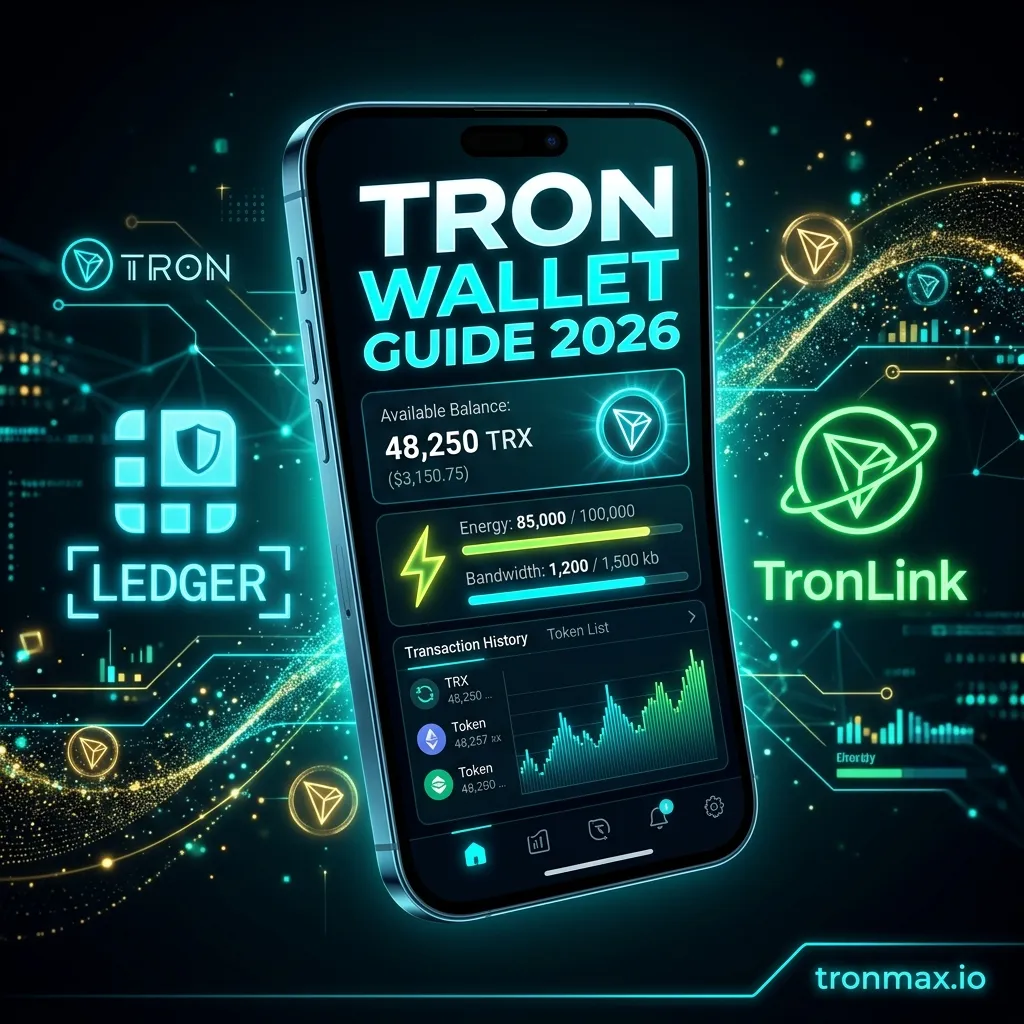
Best TRON Wallets for TRX, USDT and Energy Management
Compare five TRON wallets for TRX, USDT and Energy management: TronLink, SafePal, imToken, Trust Wallet and Ledger with TronLink.
How Much Energy Does a USDT Transfer Require on TRON?
A TRON USDT transfer commonly needs about 65,000 or 131,000 Energy. Learn what determines the amount and how to estimate your shortfall.
How to Delegate TRON Energy with Stake 2.0
Learn how TRON Stake 2.0 resource delegation works, which resources can be delegated, wallet requirements, lock periods and how to undelegate safely.