
TRON Energy Rental vs Staking TRX: Which Is Better?
For a long time, the default advice for TRON users was simple: if you want lower transaction fees, stake your TRX and generate Energy yourself. That advice still makes sense for some users, but it is no longer the only practical option. If you do not want to lock a large TRX balance, you can rent TRON energy when you need temporary resources.
After TRON’s Stake 2.0 model and the growth of on-demand resource platforms, many active users now compare two very different options: staking TRX or renting TRON Energy only when they need it.
In this guide, we’ll compare TRON Energy rental vs staking TRX, explain how each method works, and help you decide which option makes more sense for your wallet, business, or USDT transfer needs.
What Is TRON Energy Rental?
TRON Energy rental is a way to use network resources without freezing your own TRX.
Instead of staking thousands of TRX to generate Energy over time, you pay a smaller fee to receive delegated Energy for a limited period. Once the Energy is available in your wallet, TRON smart contract transactions can use that Energy instead of consuming more expensive fallback fees.
This model is especially useful for users who need Energy occasionally or in bursts, such as:
- sending USDT on TRON
- running multiple TRC20 transactions
- managing business payments
- using wallets, bots, or dApps that depend on predictable transaction costs
The key benefit is flexibility. You use Energy when you need it, without keeping a large amount of TRX locked.
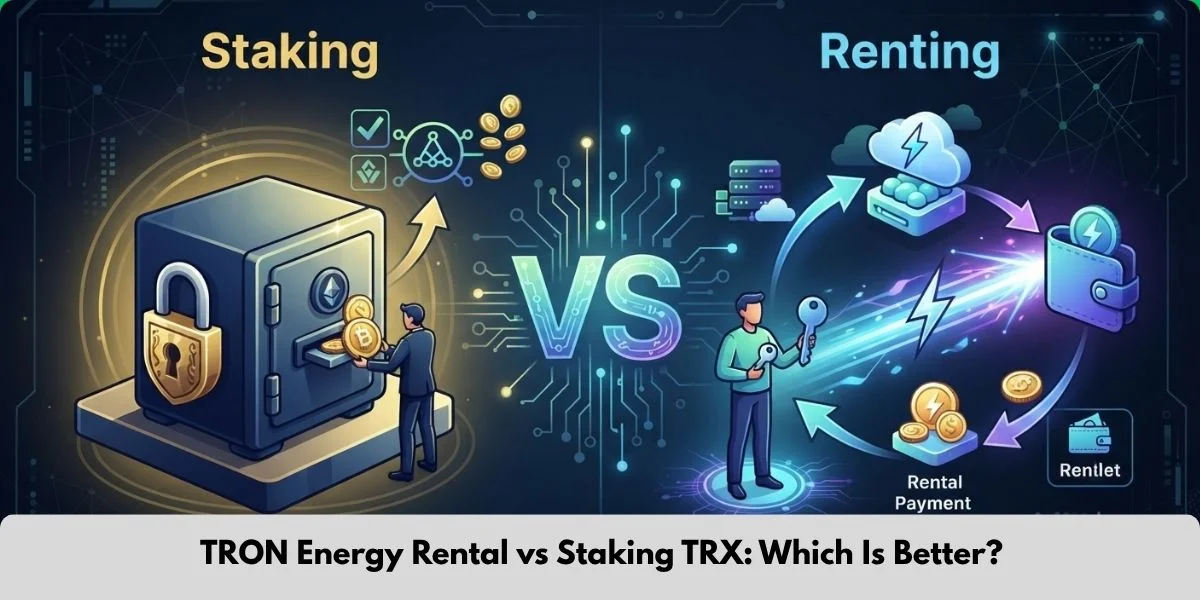
How Staking TRX Works
Staking TRX means freezing your TRX balance to receive network resources such as Energy or Bandwidth. It can also give you voting rights through Tron Power, depending on how the staking setup is managed.
For long-term TRX holders, staking can be a reasonable strategy. If you already plan to hold TRX for months or years, generating Energy from your own balance may feel natural.
But staking has a tradeoff: your capital becomes less flexible. Once your TRX is locked, you cannot instantly use that same capital for trading, liquidity, business payments, or other opportunities.
That is why staking is not always the best choice for users who mainly need TRON as a payment network.
TRON Energy Rental vs Staking TRX: Key Differences
| Factor | TRON Energy Rental | Staking TRX |
|---|---|---|
| Capital required | Low; pay only when needed | High; requires locking TRX |
| Liquidity | Flexible | Less flexible while TRX is staked |
| Best for | Active users, merchants, USDT transfers | Long-term TRX holders |
| Setup | Simple and on-demand | Requires staking and resource management |
| Cost efficiency | Strong for occasional or frequent transfers | Strong if you already hold enough TRX |
| Commitment | Short-term | Longer-term |
| Risk of unused resources | Low | Higher if you do not transact often |
The main difference is not only cost. It is capital efficiency.
With staking, you commit capital first and generate resources over time. With Energy rental, you only pay for the resource when you actually need to use it.
When Staking TRX Makes Sense
Staking TRX can be the better option if you already hold a large TRX balance and do not plan to sell or move it soon.
For example, staking may make sense if:
- you are a long-term TRX holder
- you want to participate in the TRON ecosystem
- you regularly need Energy every day
- you are comfortable managing staked resources
- you do not need instant access to your TRX capital
In this case, staking is not just a transaction-fee strategy. It becomes part of your broader TRX holding strategy.
For users like this, renting Energy may still be useful occasionally, but staking can cover a large part of their regular resource needs.
When TRON Energy Rental Makes Sense
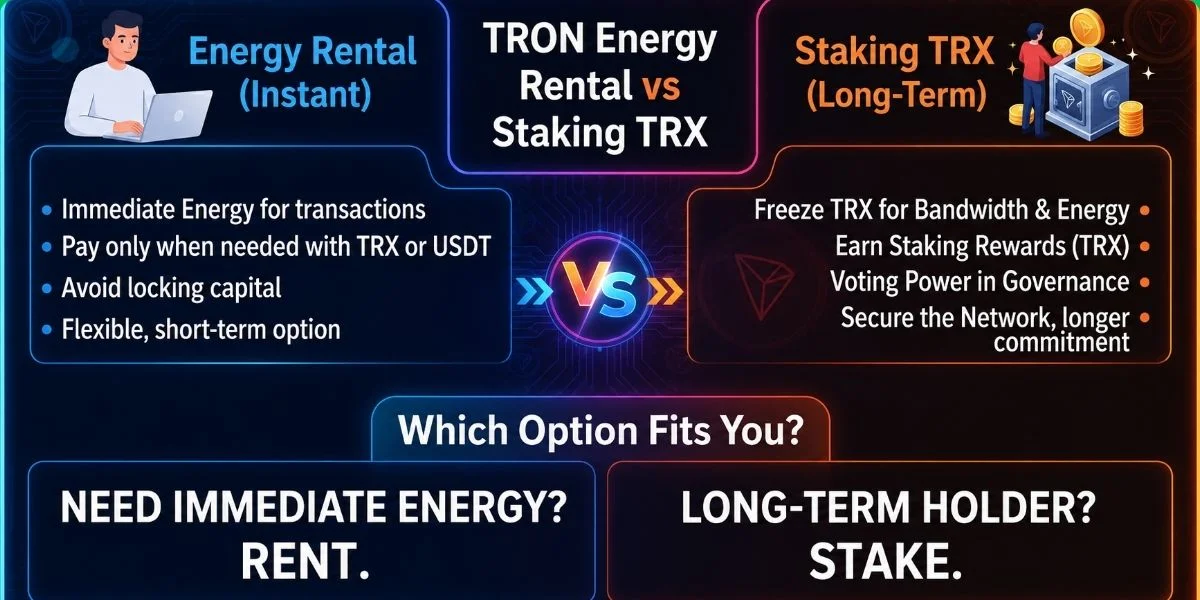
Energy rental usually makes more sense when your main goal is to reduce transaction costs without locking capital.
This is common for users who send USDT, manage payments, or use TRON for practical transactions rather than long-term TRX holding.
Energy rental may be the better option if:
- you do not want to freeze a large amount of TRX
- you only need Energy at specific times
- you want predictable transaction costs
- you run a business or payment workflow
- you prefer keeping your capital liquid
- your transaction volume changes from day to day
For these users, staking can feel inefficient. If you only send transactions a few times per week, staking enough TRX to cover all possible usage may leave unused Energy sitting idle most of the time.
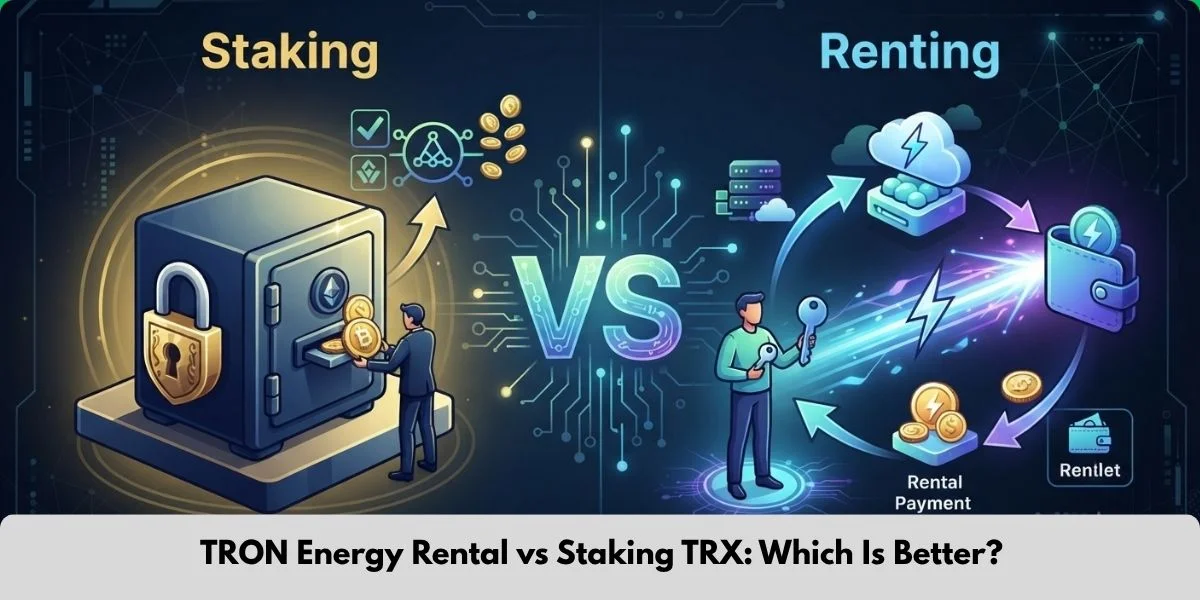
Cost Is Not the Only Factor
Many users compare rental and staking only by looking at transaction fees. That is useful, but incomplete.
The bigger question is:
Do you want to lock capital to generate Energy, or pay for Energy only when you need it?
Staking may reduce direct transaction costs, but it requires holding and locking TRX. Energy rental may involve a small rental fee, but it keeps your capital available.
For active traders, small businesses, payment operators, and users who move USDT irregularly, that flexibility can matter more than owning the resource generation process.
Example: Occasional USDT User vs Long-Term TRX Holder
Imagine two different users.
The first user holds TRX long term and sends TRC20 transactions every day. For this person, staking can make sense because the Energy generated from staked TRX is likely to be used regularly.
The second user does not want to hold a large TRX balance. They mainly use TRON to send USDT a few times per week. For this person, staking may be inefficient because most of the generated Energy could go unused. Renting Energy only before a transaction is usually more practical.
This is why there is no single answer for every user. The better choice depends on how often you transact, how much TRX you already hold, and whether liquidity matters to you.
Final Verdict: Should You Rent Energy or Stake TRX?
If you are a long-term TRX holder and regularly use the TRON network, staking can be a solid option. You already hold the asset, and you can use your staked balance to generate resources over time.
But if you mainly use TRON for USDT transfers or occasional smart contract transactions, Energy rental is often the more flexible choice. It lets you access resources on demand, avoid locking a large TRX balance, and keep your capital available for other uses.
In simple terms:
- Stake TRX if you already hold TRX long term.
- Rent TRON Energy if you want lower transaction costs without locking capital.
For many active users, the best option is not the one that generates Energy permanently. It is the one that gives them the right amount of Energy exactly when they need it.
Related Guides
How to Send USDT on TRON Without TRX for Network Fees
Learn how to send USDT on TRON without burning TRX for network fees by using TRON Energy. Check the required Energy and reduce TRC20 transfer costs.
Best TRON Wallets for TRX, USDT and Energy Management
Compare five TRON wallets for TRX, USDT and Energy management: TronLink, SafePal, imToken, Trust Wallet and Ledger with TronLink.
How Much Energy Does a USDT Transfer Require on TRON?
A TRON USDT transfer commonly needs about 65,000 or 131,000 Energy. Learn what determines the amount and how to estimate your shortfall.
How to Delegate TRON Energy with Stake 2.0
Learn how TRON Stake 2.0 resource delegation works, which resources can be delegated, wallet requirements, lock periods and how to undelegate safely.